A quick update…

According to the latest from The Himalayan Times the three major political parties are busy holding  last minute  talks while the time frame of the Constituent Assembly (CA) expires.

The Top leaders of the Nepali Congress (NC), CPN-UML and Unified CPN-Maoist are holding meetings within their parties and with others to  try to get some form of consensus before the deadline for a new constitution ends at midnight Nepali time.

It is all looking a bit dire from the numerous blogs and news sources I have been looking at.

There is  fear about what will happen tomorrow if a last minute deal isn’t pulled together.

Here is a pretty good round up of the situation from Aljazeera

Some words from a Nepali friend…

Some words from a Nepali friend of mine.

“We all are well but so worry seeing the political situation of Nepal.The deadline of constitution assembly will finish tomorrow (May 28) To extend the date, it needs two third number in constituent member. It is total 601 seats. And to extend the date of constituent assembly, it needs 401 seat. With out Maoist, it is not possible to extend it. But today, Maoist decided not to extend it. So it is so confused here that what will be after tomorrow. May be war, may be king come again, may be military come, may be Maoist go to jungle again and so on.”

News coverage over today’s deadline is indicative of this fermenting uncertainty. I really have no way to gauge how things will turn out currently being outside of the country. I hope for the best but with differing factions showing off paramilitary wings of their political movements, PM Nepal holding a tough line and the Maoists doing what they do I am concerned. Fingers crossed for a good outcome once the deadline for the constitution passes today.

Deadline day looms

Tomorrow – May 28th – is the deadline for Nepal’s constitution.

Differing political blocks (of the 20 plus political parties involved including the Maoists)have been scrambling to get an extension of the deadline but with little success. Parliament is closed today and will reconvene for the deadline.. Rival factions have started to have photo ops with the media of their paramilitary groups according to the Himalayan Times and Kathmandu Post. There is no finalised constitution. Nepal is amazing but rife with problems inflicted from external and internal sources – development issues, economic uncertainty, political instability, lack of access to clean water, food supply costs, load shedding, pollution, competing INGO’s and NGO’s, homelessness, land seizures, drugs…

But this country deserves a bright future.

The people are tenacious even after years of political instability and civil war. They are open-hearted, funny  and intelligent. The country is beautiful and despite its issues Nepal gets under your skin. I miss living there. I love Nepal and I am fearful about her future if things go badly after the deadline passes.

Here are some links if you wish to follow what is happening more closely.

http://english.aljazeera.net/news/asia-pacific/2010/05/2010525101847265629.html

http://www.thehimalayantimes.com/

http://epaper.ekantipur.com/ktpost/epaperhome.aspx?issue=2752010

http://blog.com.np/

http://www.nepalnews.com/main/index.php/news-archive/2-political/5142-maoist-ethnic-group-forms-paramilitary-wing.html

To my friends and family in Nepal be safe – my thoughts are with you.

Please contact me if needed or you have information about what is happening you would like to share.

Bhanda -day 1

A few hours ago, according to the Himalayan Times, Maoists took to the streets of Kathmandu filling the night  with  shadows  sourced from burning brands.

I don’t know about you, but for me a group of protesters carrying burning torches and patrolling the streets has a menacing undertone.

The Himalayan Times was a sobering read this morning. The email in my inbox from a Nepali friend , “Bob” (named changed) was even more sobering.

This is what Bob had to say about the Maoists actions in Nepal;

“They have weapons and ordered people to come to the capital city for war with government. And many people came from village and participant in their demonstration though many people do not have desire to participant.”
“Actually Maoist are lying to the world. They are playing double role. One thing saying to the world -but another things they are doing here. Their activities are  against the democracy.”

Other friends I have managed to contact say it’s okay but a bit edgy with locals advising them not to go out.

But it is Nepal, anything could happen and everything could be fine in a few days or not. It is that kind of country.What to do?

Also the American’s have stopped  public services  at the embassy- I don’t like it when embassies close like that.

For all the latest happenings in Nepal. I suggest the Himalayan Times is a good starting point.

Check  them out here

P.S If you have any news of what is happening, on the ground in Nepal, please get in touch.

Bhanda Blues

As the date draws near for a completed constitution in Nepal ( May 28) things are hotting up with the Maoist’s having declared a indefinite strike in the last 12 hours. This means, if the strike goes forward, the country will practically shut down till 5pm every-night when stores can open so the population can stock up on  food and other essentials.( Until the Maoists feel they have gotten what they want from the strike.)

The Maoists whom basically abandoned running the country in May 2009  are now holding the country to ransom, shipping in protesters from rural areas into Kathmandu, to give their cause more leverage on the streets of the capital.

I witnessed this phenomenon on my most recent trip just before the start of a five day bhanda (strike). Going out of the city for the day I saw seven buses driving into the capital , over an hour, filled to the brim with red clad Maoist’s for the upcoming protests in Kathmandu. It can’t be denied this is clever political tactics. People do not break Maoist bhandas- as the penalties for breaking a strike are harsh. I witnessed a shop owner beaten by a pack of men and rickshaw drivers bloodied and bruised for daring to cross the Maoist mass.

But I am wondering what the point of the latest action is.The Maoists had a hard time running the country and stepped down. The current coalition of 22 parties aren’t much better but they are trying to get things together despite obstructionist behaviour from a number of groups in addition to the Maoists.

If Nepal gets a constitution it gets a chance to really address the issues it faces with a clear mandate behind it’s actions.

Here are some links, from various news agencies, covering the latest in Nepal.

CNN

Al Jazeera

Himalaya Times

leaving kathmandu


The Bhagwhati river, which runs through Kathmandu.

I left Kathmandu three weeks ago. It was hard leaving that beautiful, crazy, dirty, messed up and wonderful city. I miss it.

It taught me  and is still teaching me so much. I am still processing everything I saw and experienced there. I don’t quite have the words yet. But it was and is  a life changing experience that I am very grateful for. 

I want to say a huge thank you to everyone who made following this dream of mine a reality. It is the first steps on a life long journey I feel.  I feel very blessed and grateful that so many people in my life are supporting me as I take one baby step at a time to understand and help raise awareness around poverty and the people affected by it.

Thank you!

I will be posting some more stories on my experiences and observations soon.

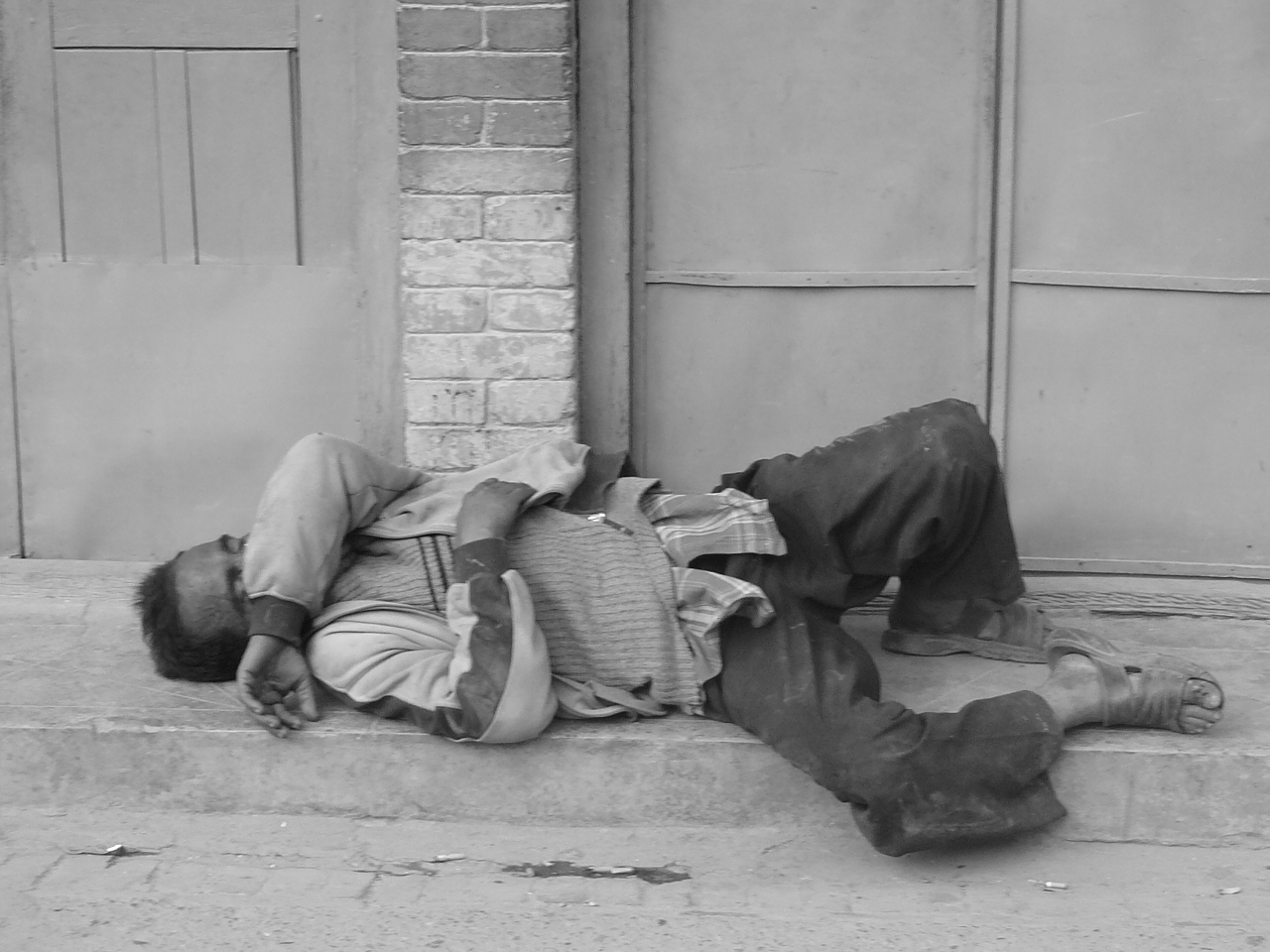
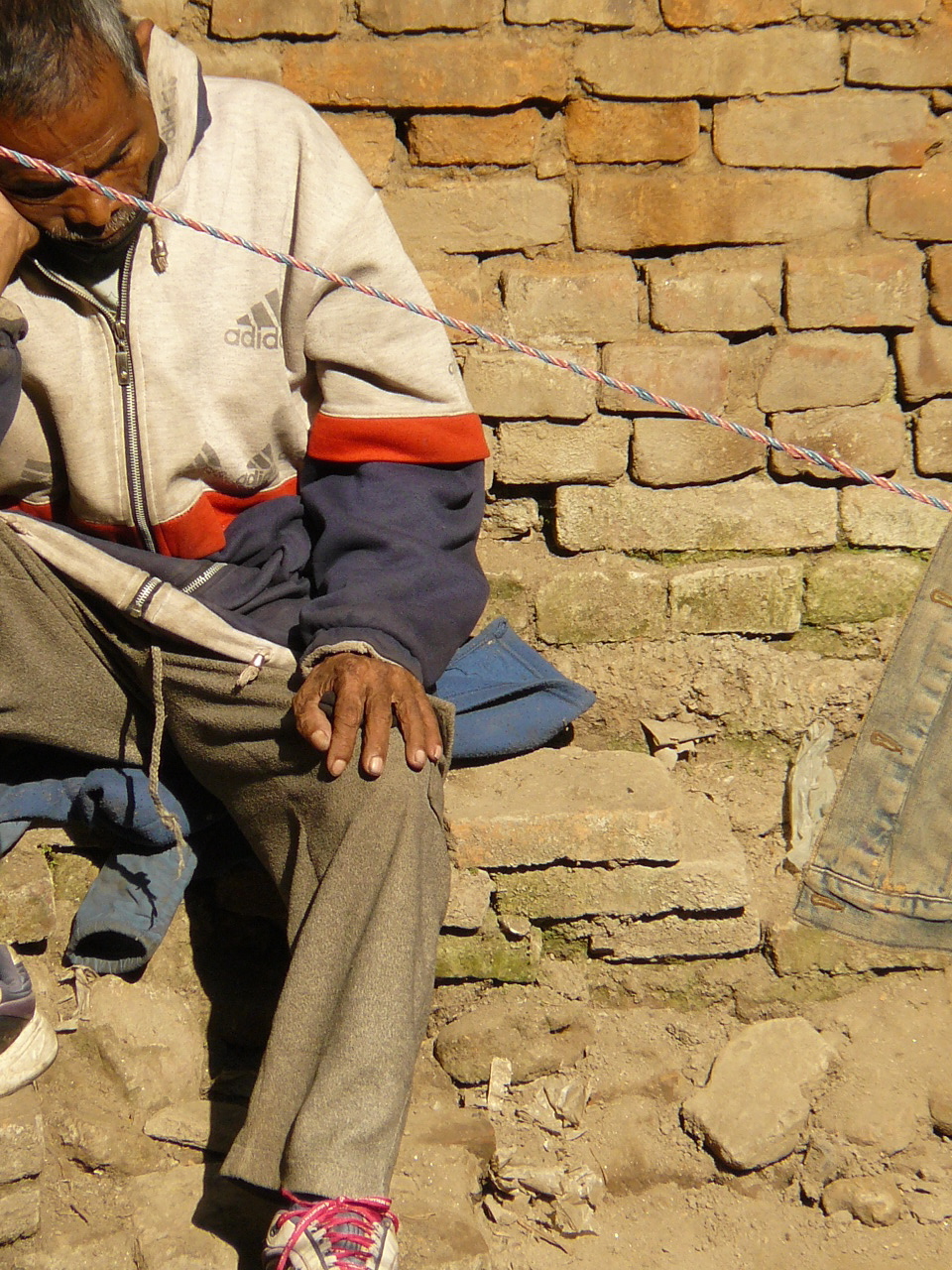
A homeless man sleeping on the outskirts of Thamel, the main tourist area of Kathmandu.

Pollution poverty

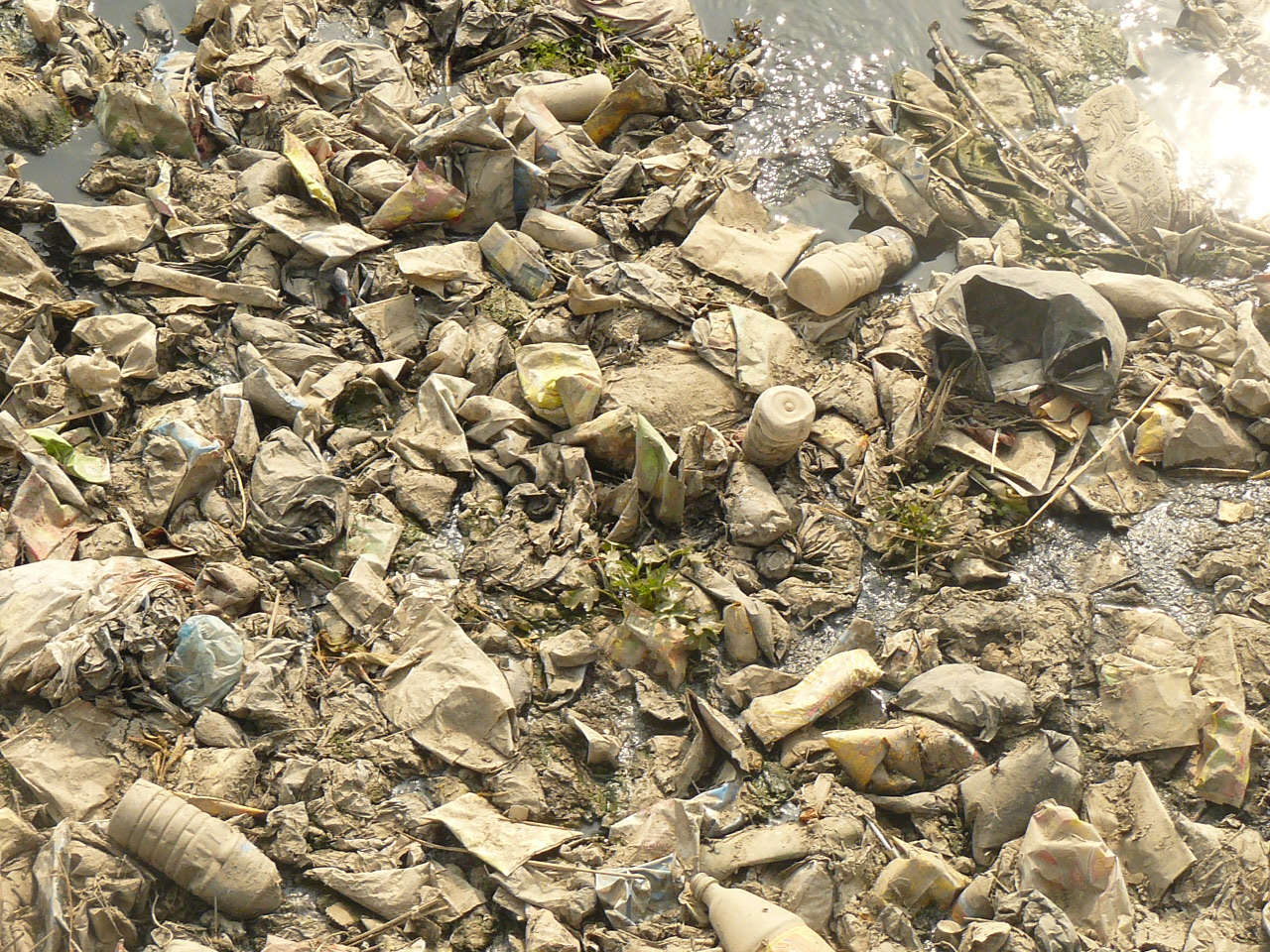
Living in Kathmandu your body becomes one with the dust or it rebels. My body has rebelled. The dust of burning plastic, car fumes, shit, a rubbish collection strike, manufacturing unchecked and unpaved roads has knocked me over in the last week.

I have been coughing and spluttering, wheezing like and old lady so today I succumbed and went to the traveler’s medical center. $100 US later and I have been told that basically all the dirt and fecal matter in the air here I am a allergic too – hence the spluttering  – but my nice doctor has given me drugs and an inhalers -so she’ll be right!

But my experience has got me to wondering about clean air as a human right issue.

Not having clean air in a country with user payers medicine creates  a furthering of the poverty framework.  Environmentally caused illness  and the inability to access health-care are a nasty combination.According to a recent issue of the Kathmandu Post heart conditions and breathing problems/illness are increasing at alarming rates in the Kathmandu Valley due to air pollution and “development”. Basically the air here is poison. A local doctor I know says on anecdotal evidence the increases are lessening life expectancy significantly in the valley.

Kathmandu is an amazing place but the water and air quality and access to clean water  is pretty appalling. I am concerned at the cost people living in this country are paying to meet Western expectations of living standards and development.

For a country that has only been open to the West since 1950 it appears to me, at least, the people of Nepal are paying a huge price environmentally to meet Western expectations of what a good life is.

After staying in a village here for a short period of time village life- living on less then $2 US a day is not poverty – these people can feed themselves, can support their families and can lead a good life. It may not be an easy life but it isn’t what I’d call poverty ,though by the United Nations and Non Government Organisation’s it is classified as such. My question is why? Who benefits from this definition of poverty? ( I will add in the city this definition of poverty and the hard task of accessing clean water etc  the definition makes more sense.)

Problems in countries like Nepal seem to occur when Western/ first world expectations and infrastructures are imposed. We make a business out of it. We place conditions on aid and help so the markets are opened up and their resources can be exploited by our companies – we create a poverty market and then exploit it and the population to meet our own needs. Not only of the market but our needs to make the world a “better place” to impose our understandings and ultimately control the populations of non Western nations to our expectations of living.

These behaviours  and expectations are killing and/or crippling countries like Nepal. ( For example look at Africa – all the aid in the world will probably not improve what is the dire straits of many African nations) Our interference ,our insistence of help is a hindrance to what would have been their natural path of development. This seems obvious in a country with over 40.000 NGO’s – the benefit of which sometimes is hard to see – with the exception of  the flash cars driven by the UN and Red Cross which they fly in-what a bloody travesty. It makes me angry and frustrated. We make a nation a victim when perhaps this is not the case, we make a culture reconfigure itself to met our expectations creating political and economic instability which plays into the business of poverty – to the first world’s economic and political advantage.

I do realise I am speaking a large generalisations here, and these are perspectives from my personal observations. I am not pretending to know and nor to I have any specific answers. But surely we can do better?

Novemeber 2010 -It has been quite a while since I wrote this, but evidence suggests, that though there are some holes in my argument this business of poverty and pushing developing nations towards western models of what “developedis, is a real issue for nations like Nepal. Nations like Nepal should be able to develop at their own rate with our support and political stability should always come first. Markets being opened up to foreign investment should not be a condition of aid or development loans. Assisting access to clean water and regular power supply should be supported financially without a nation sacrificing the means to maintain political stability. The Guardian has started to cover this issue in depth if you are looking for more information.

Because of Bhagwhati


First off please excuse any dud spelling. I am using a keyboard circa 1997 and it and I – I also have a wondrous stomach bug right now that is proving rather challenging -are operating in opposition to one another.

Ten days ago in the Lamjung district of Central Nepal I had an experience that has become life changing for me.

A friend, a German doctor who has traveled and worked in Nepal since 2003, took myself and friend to the village of Katrechati.

Katrechati  village sits on a hill in the center of a valley 200 Km’s outside of Kathmandu Valley. The village overlooks paddy fields, dry this time of year, and a river. Fruit trees surround the humble thatched and low ceiling homes of clay and brick.

Everything these people need they source from the land or the surrounding jungle and rivers. It is a subsistence life. If a family is well off they may own their  land rather then rent, have a couple of buffalo, a goat and a bounty of chickens.(This is what some people and organisations define as living in poverty as they live on less then the United Nations poverty threshold of  $2US per day.)Bhagwhati and her wondrous family took me into their home and into their hearts and they have totally stolen mine.They live subsistence lives, no TV, no fridge, no automatic setting washing machine – they have soap , a river, rocks and woman power.
I am beginning to have doubts that how these people live is  as negative as rural poverty seems to be pitched these days in the media and by some NGO’s.These people generally speaking can support themselves and their families.They have shelter, food and Bhagwhati’s family is one of the most loving and open family’s I have had the pleasure of meeting.Yes it is a tough life and things can be improved (think access to medical care, clean water and education) but these people have something unique something I can’t quite put my finger on. This community have rich lives filled with love even if they are living without refrigeration.
Things seem to get more complicated for subsitance farmers etc when outside organisations come in and impose structures and economic plans to “develop” a country. There is a Western assumption, from my perspective, that a farm ( in a rural context)  needs to be profitable to be viable – despite the fact it may provide for 20 odd people year round.
I feel this might upset some people, as yes this is a politically unstable country and there is serious need here, but Nepal is  serviced by over 40,000 NGO’s. Technically this country should be environmentally pristine , poverty free – a golden child of the sub continent. But it’s not.Political infighting between Maoist’s, and the 23 other political parties cripples this place and the World Bank, IMF and the UN could do better.
This country has  a huge water supply but Mia, a Nepali friend of mine, used to have to catch a bus to the Coke factory every day to buy water for her family. Mia and her husband Bhagwan have since moved back to the village I visited to have a better life  -for themselves and their lovely hyperactive son Manor.
Water here is sold to India, as is electricity, so in the whole of Nepal there are power cuts  (load shedding as supply cannot meet demand) of up to 16 hours a day for parts of the year.We are currently sitting on ten hours a day. (Most of the country also has water issues of some description – be it access or sanitation.)

I have heard from a number of sources that this on selling of power is due to World Bank/IMF restrictions placed on the coalition govt which are conditional to on-going aid. This means that the World Bank is some ways is liable to the worsening political,environmental, electricity and water conditions in Nepal.

It might seem a bit of leap but if the population had a reliable electricity and water supply the political instability here would have a chance to settle. The population wouldn’t be constantly aggravated by what they don’t have. Or what  they should have and could have if water and power didn’t need to be on sold to outside competition to meet aid conditions for the country. It’s bunk!
Sorry, I got lost in a bit of a tangent here but I will continue my village story another time and continue my dialogue on Nepal and poverty at a later date.

In other news tomorrow I am off to deliver more Xmas presents to another group of children…yes a late Chrissie …but yay I get to have it twice!